
Active and passive funds offer different advantages across market-cap segments, making a mix of both a sensible portfolio strategy.

Indian stock market investors are closely monitoring crude oil prices, geopolitical developments in West Asia, and the implications of the US Sanctioning Russia and Iran Act, which could impose tariffs on countries, including India, that purchase Russian crude.
'The Rs 35,000 crore of capex every year, I don't get to sign 35 paise out of this.'

Indian benchmark indices Sensex and Nifty extended their losses for the fourth consecutive session, with the Sensex declining 363.66 points and the Nifty dipping 126.65 points, primarily due to a sharp jump in Brent crude oil prices to USD 98.32 per barrel amid escalating tensions in West Asia.

Indian benchmark indices Sensex and Nifty opened higher, extending gains from the previous session, driven by a rally in global markets and a slight cooling in crude oil prices. Optimism around a potential meeting between US and Iranian presidents also contributed to positive sentiment.Later both indices pared gains and were trading in red. Track Sensex, Nifty on September 22.

Anup Saha, currently a Wholetime Director at Kotak Mahindra Bank, has been appointed as the new Managing Director and Chief Executive Officer for a three-year term, effective January 1, 2027, with the Reserve Bank of India's approval.

Indian stock markets experienced a significant downturn, with the Sensex plunging 1,124 points to a six-month low and the Nifty closing below 22,800, driven by surging crude oil prices, escalating geopolitical uncertainties, and weak global market trends.

Shares of the National Stock Exchange of India Ltd (NSE) climbed nearly 1 per cent on their trading debut, reaching a market valuation of Rs 4,53,123 crore, following a significantly oversubscribed initial public offering.

The market capitalisation of these 41 companies ranged from Rs 30 crore to around Rs 1.26 trillion, as on August 7.

After four consecutive months of outflows, foreign portfolio investors (FPIs) have turned net buyers in Indian equities in July, investing over Rs 15,157 crore, driven by improving domestic macroeconomic indicators, a stable rupee, and better global risk sentiment.

The National Stock Exchange of India's (NSE) mega Rs 22,569-crore initial public offering (IPO) opened for subscription, receiving 9 per cent bids on its first day, with strong participation from anchor investors.

India's current account deficit could widen to 1.7 per cent of GDP, or about $71 billion, if crude oil prices stay above $90 a barrel for a significant part of the second half of FY27.

Indian benchmark indices Sensex and Nifty rebounded on Wednesday, driven by a decline in crude oil prices below USD 100 per barrel and optimism surrounding a potential de-escalation of the conflict in West Asia.
Indian equity markets, led by the Nifty 50, saw gains following a pullback in Brent crude prices towards $101-102 a barrel and weaker-than-anticipated US jobs data, which eased concerns about a Fed rate hike. However, analysts caution that markets are likely to remain volatile in the near term.

Foreign Portfolio Investors (FPIs) withdrew Rs 49,340 crore (USD 5.16 billion) from Indian equities in June, driven by global risk aversion, a preference for developed markets, soaring US bond yields, and stretched domestic valuations, bringing total withdrawals to Rs 2.7 lakh crore so far in 2026.

Indian benchmark equity indices, Sensex and Nifty, closed mixed on Friday. While a drop in crude oil prices offered some relief, weakness in IT stocks and several Tata Group counters, including a significant dip in Tata Chemicals and ongoing boardroom issues at Tata Sons, limited a broader market recovery.

The CBI has filed a closure report in the 2002 disinvestment of Hindustan Zinc Ltd, stating that allegations of irregularities could not be substantiated. This comes despite a 2022 Supreme Court directive by then-CJI D Y Chandrachud to register a regular case, citing sufficient material and concerns over undervaluation and the role of a global advisor. The special court will now decide on the report.
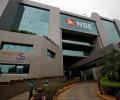
The National Stock Exchange (NSE) has set its initial public offering (IPO) price band at Rs 1,700-1,785 per equity share, with the subscription period running from September 17 to September 21, aiming to raise up to Rs 22,569 crore.

Indian benchmark indices Sensex and Nifty saw a significant rebound in early trade, with the Sensex surging over 700 points, driven by a decline in crude oil prices, easing concerns over Federal Reserve tightening, and the appointment of Anup Bagchi as the new MD and CEO of HDFC Bank.

Indian benchmark indices Sensex and Nifty rebounded on Wednesday, driven by value buying in banking stocks and select heavyweight counters, with the Sensex climbing 332.63 points and the Nifty ending above 23,200.
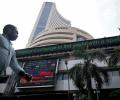
India's derivatives market experienced a significant 23 per cent fall in average daily contracts traded in August, reaching a 13-month low of 224 million. This decline is primarily attributed to regulatory changes, including a higher securities transaction tax (STT) and enhanced collateral requirements, alongside the introduction of a closing auction session.

The National Stock Exchange of India's (NSE) mega Rs 22,569-crore initial public offering (IPO) was subscribed 43 per cent on its first day of bidding, making it India's second-largest public issue after Hyundai Motor India's Rs 27,870-crore IPO in 2024.

Indian banks are projected to achieve healthy profit growth in the second quarter of financial year 2027 (Q2FY27), driven by lower credit costs, robust advance growth, and fee income. However, net interest margins (NIMs) are expected to face pressure due to significant mobilisation of foreign currency non-resident (bank) FCNR(B) deposits.

Holding-company discounts and losses at key unlisted ventures could weigh on Tata Sons' IPO valuation, though its diversified portfolio may still command a premium.

Jindal Supreme (India) Ltd's initial public offering, a manufacturer of plastic piping solutions, was subscribed an astounding 181.07 times on its final day, reflecting robust investor demand across all categories.

Churchill Brothers, a dominant force in Indian football in the 90s, are making their Indian Super League debut against Mumbai City FC. Head coach Dimitris Dimitriou aims to establish a distinct football culture and competitive style of play for the club, despite a fast-forward pre-season.
Indian benchmark indices, Sensex and Nifty, traded marginally higher in early trade despite the US Federal Reserve's recent rate hike and indications of further tightening, with the National Stock Exchange's much-anticipated Rs 22,569-crore IPO also opening for subscription.

Prime Minister Narendra Modi, speaking at the UPSC centenary, urged a fundamental shift in civil services recruitment and governance. He highlighted the need for services to adapt to an "instant-delivery world" powered by AI, focusing on citizen-centricity and evaluating candidates' motivation beyond academic knowledge. The PM also praised Captain Smit Machchhar's bravery during his address.

Non-resident Indians are increasingly investing in luxury homes in India, driven by geopolitical uncertainties, particularly the Iran war. This trend is observed across major cities like Mumbai, Bengaluru, and the National Capital Region, with developers noting a significant rise in NRI pre-sales. While some see it as a temporary shift, others believe India is becoming a stable, long-term investment destination for NRIs, especially those from West Asia.

Shares will be allocated across different institutional investors, including domestic mutual funds, other domestic institutions and FPIs.
Adani Airport Holdings (AAHL) has announced it will raise 9,825 crore through a primary equity infusion from a consortium of global investors, including Alpha Wave Global, Premji Invest, Temasek, and funds managed by BlackRock, who will collectively acquire a 5.54 per cent stake.
The National Stock Exchange of India's (NSE) mega Rs 22,569-crore initial public offering (IPO) was fully subscribed on the second day of bidding, driven by strong interest from qualified institutional buyers and non-institutional investors.

Indian benchmark indices, Sensex and Nifty, traded flat in early deals due to elevated crude oil prices exceeding USD 100 per barrel and persistent geopolitical tensions, which subdued investor risk appetite.

The global artificial intelligence (AI) boom has significantly reshaped equity markets, with Taiwan surpassing India to become the world's fifth-largest stock market. India has seen its market capitalisation decline by 7% year-to-date, while AI-linked economies like Taiwan and South Korea have surged.
The National Stock Exchange's initial public offering (IPO), expected to raise around Rs 30,000 crore, is likely to open for public subscription on September 18 and list on September 25, potentially becoming India's largest IPO.

Indian companies, including NBFCs, filed proposals to raise $7.696 billion through external commercial borrowings (ECBs) and foreign currency convertible bonds (FCCBs) in July 2026, a significant increase from $6.09 billion in June.

The National Stock Exchange marked its stock market debut at the Bombay Stock Exchange on September 24, 2026, with a traditional gong-ringing ceremony.
Indian benchmark indices, Sensex and Nifty, saw an early rebound after significant losses, driven by value buying, though elevated oil prices and anticipation of the US Federal Reserve's policy decision tempered gains. Track Sensex, Nifty on September 16.

Net SIP inflow is calculated by subtracting redemptions from gross SIP investments.

BAFs seek to offer a smoother experience across market cycles, not the full upside of a bull market.
